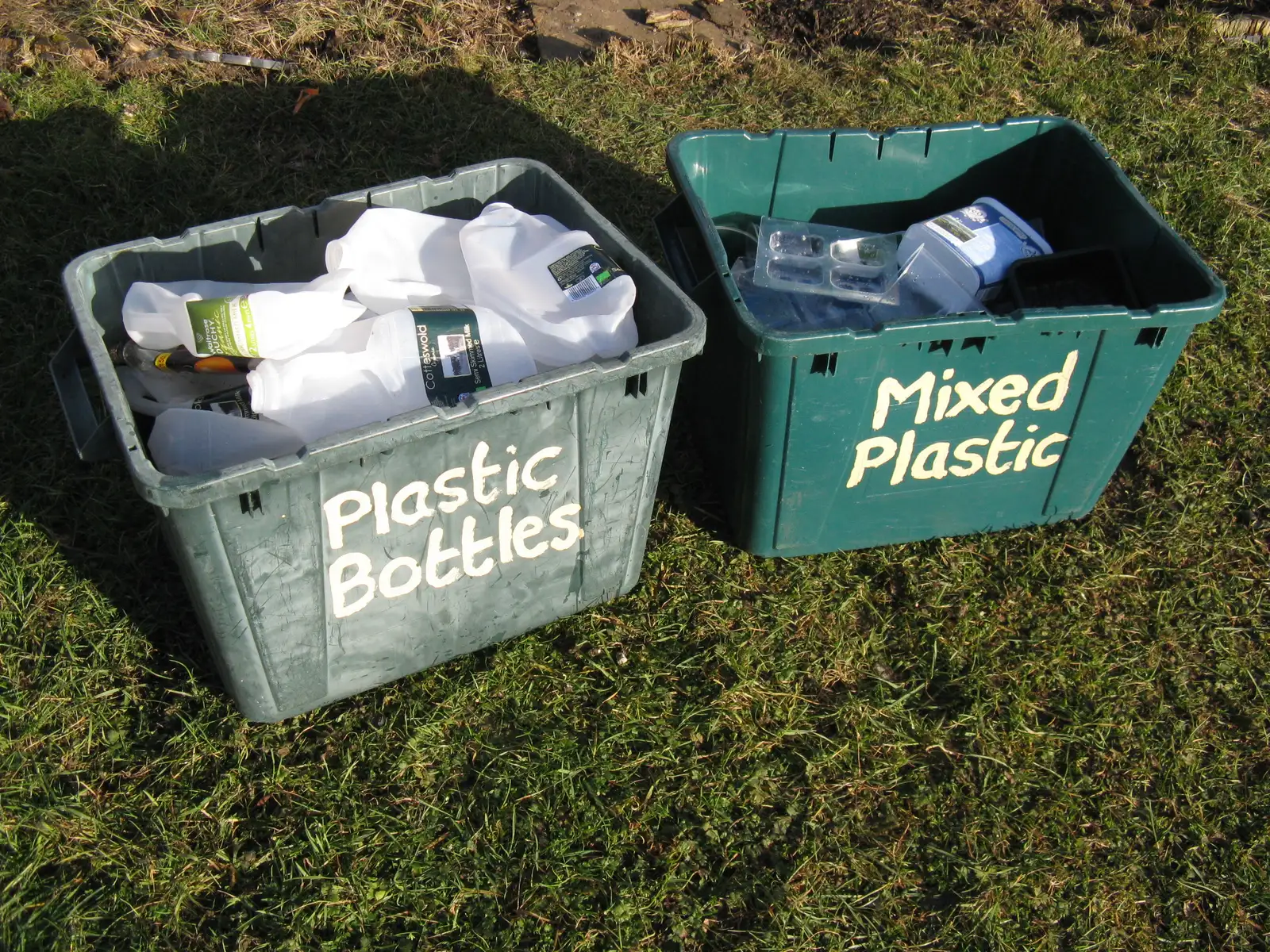
Extended producer responsibility (EPR) makes the companies that put a product on the market pay for managing that product once it becomes waste. Instead of leaving collection and recycling costs with municipalities and taxpayers, EPR shifts the financial — and sometimes the organisational — burden back to producers, so the price of a product starts to reflect what it costs to deal with at end of life.
That single idea sits behind a growing stack of EU rules, national schemes, and reporting deadlines. If you run collections, manage containers, or handle recycling data, EPR is quietly reshaping what you are expected to measure and prove. Here is what it is, who it touches, and where the data work lands.
What is extended producer responsibility?
The OECD defines extended producer responsibility as an environmental policy approach in which a producer's responsibility for a product is extended to the post-consumer stage of its life cycle (OECD). In EU law it is set out in the Waste Framework Directive as a set of measures ensuring that producers bear financial responsibility, or financial and organisational responsibility, for the waste stage of a product's life (European Commission).
In practice, producers meet that obligation by paying fees, usually through a producer responsibility organisation, that fund the collection, sorting, and recycling of the waste their products become. The fee is the lever: when it is higher for hard-to-recycle designs and lower for recyclable ones, EPR is meant to push better product design, not just fund clean-up after the fact.
Who does EPR affect?
EPR is broadest for the product streams that have carried schemes the longest — packaging, electrical and electronic equipment, and batteries — with newer rules extending to textiles, tyres, and end-of-life vehicles. The people affected fall into a few groups:
- Producers, importers, and online sellers who place goods on the market. They register, report volumes, and pay fees — and under the EU Packaging and Packaging Waste Regulation, that registration happens per member state before selling there (Latham & Watkins).
- Municipalities and waste collectors who run the collection and sorting the fees are meant to fund, and who increasingly have to document what they actually collected and treated.
- Recyclers and sorting facilities whose throughput and material recovery become part of the evidence base.
If you collect or process waste on behalf of a local authority, you may not pay the fees, but you are often the one asked to prove the tonnages and service events that justify how they are spent.
What EPR means for reporting and data
The real operational shift is not the fee — it is the paper trail. EPR schemes run on evidence: how much material was placed on the market, how much was collected, what condition it arrived in, and where it ended up. That turns loose operational records into a reporting obligation.
For operators, three things matter most:
- Traceability of service events. Which container was serviced, when, and by whom — the audit trail that backs a tonnage claim.
- Material-level records. Separating streams cleanly so packaging, food waste, and residual are counted as what they are, not lumped together.
- Consistent measurement. Fill-level and weight data captured the same way every time, so year-on-year figures actually compare.
This is where clean container and service data earns its keep. A governed waste analytics layer that keeps deterministic records of containers, materials, and service events — where the software counts and people interpret — gives you numbers you can stand behind at reporting time. If you also report planning-grade emissions alongside tonnages, keep that framing honest: tank-to-wheel CO₂e figures are useful for planning routes, not a substitute for compliant climate accounting.
Good recycling data and EPR reporting reinforce each other. The same records that support municipal recycling programmes — sorting quality, capture rates, contamination — are the ones a scheme wants to see, and the hidden costs of poor recycling are exactly what better EPR data helps you catch early. There is more on this in our hub on recycling and compliance.
How EPR is expanding
EPR is not standing still. The EU's revised Waste Framework Directive, which entered into force in 2025, introduces mandatory EPR schemes for textiles across all member states and sets binding food waste reduction targets (European Commission). On packaging, the Packaging and Packaging Waste Regulation — adopted in December 2024 and applying from August 2026 — ties EPR fees to how recyclable a package is (Latham & Watkins).
The direction of travel is clear: more product streams covered, fees that reward better design, and more granular reporting behind all of it. Operators who already capture clean, container-level data will find each new scheme easier to feed.
Frequently asked questions
Is EPR the same as a recycling tax?
No. A recycling tax raises general revenue; EPR fees are ring-fenced to fund the collection, sorting, and recycling of the specific products that generated them, and are typically administered by a producer responsibility organisation rather than a tax authority.
Who pays EPR fees?
The producer that first places a product on the market — which can include manufacturers, brand owners, importers, and, increasingly, online marketplaces selling into a country.
Does EPR apply to small businesses?
It depends on the scheme and the country. Many set thresholds or simplified obligations for small producers, but the trend under EU rules is toward registration for anyone placing covered products on the market.
What data do waste operators need for EPR?
Reliable records of what was collected and treated: service events tied to specific containers, material-level tonnages, and measurement captured consistently enough to compare year on year.
Interested in hearing more? Get in touch with a WasteHero expert.